
Best cat brush for senior cats in 2026
Best overall for gentle routine grooming: KittyWand. Best for light surface grooming: a soft-bristle cat brush. Best for cats comfortable with being stroked: a grooming glove. This 2026 guide to the best cat brush for senior cats also includes a grooming comb for coat checks, because a comfortable brush does not replace coat-appropriate combing or mat care.
- KittyWand is the best cat brush for senior cats needing gentle routine grooming, not mat removal.
- Choose a gentle cat brush by contact feel, handling, and your cat’s response—not age alone.
- For the best brush for short haired cats, prioritize comfortable surface grooming over deep coat penetration.
- Long-haired senior cats need coat-appropriate combing alongside brushing; tight mats need professional attention.
Why this matters
Your older cat deserves grooming that feels manageable, not a session to endure. Choose a tool you can guide lightly, then let your cat’s response determine how much you do.
Senior cats do not all need the same brush. Coat length, tangles, tolerance for touch, and changes in grooming habits matter more than the word senior on a product label.
A gentle brush is for routine coat care, not for working through pain or pulling apart tight mats. If your cat suddenly objects to familiar brushing, or stops caring for an area they previously groomed, speak with your veterinarian rather than increasing pressure.
What makes the best cat brush for senior cats?
For this 2026 guide, comfort comes before how much hair a tool collects. Look for these qualities:
- Comfortable contact: Examine the tips and brushing surface. Avoid continuing with any tool your cat finds uncomfortable.
- Light, controlled handling: Choose a handle or wearable tool you can guide without pressing into the coat.
- Coat suitability: Surface grooming and checking a long coat for tangles are different jobs. One tool need not do both.
- Easy cleaning: Choose a grooming surface you can clear of collected hair and clean according to its care instructions.
- A manageable introduction: Favor a tool you can show your cat, offer for inspection, and introduce with a light stroke.
Do not judge the brush only by its softness in your hand. A comfortable session also depends on pressure, direction, location, and whether your cat wants contact at that moment.
Senior cat brushes at a glance
These 2026 recommendations cover distinct uses rather than treating every grooming tool as interchangeable. The comb is included as a companion tool, not as a substitute for a comfortable everyday brush.
| Grooming option | Best for | Standout feature | Key limitation |
|---|---|---|---|
| Silicone cat brush | Gentle routine brushing | Firm silicone bristles with supple tips on the featured brush | Not a tool for pulling apart mats |
| Soft-bristle cat brush | Light surface grooming | A bristled surface for light passes over the outer coat | Does not replace checking beneath a long coat |
| Grooming glove | Cats comfortable with hand contact | A wearable grooming surface | Hand contact does not guarantee acceptance of the glove |
| Grooming comb | Checking a longer coat for tangles | Separated teeth help you work through accessible coat sections | A snag is a reason to stop, not pull |
1. KittyWand: best cat brush for gentle routine grooming
KittyWand is the best cat brush for senior cats whose owners want gentle routine grooming, not mat removal. Its verified features include silicone Whisker Bristles™ that are firm with supple tips, a long ergonomic handle, and a curved, multi-sided Kitty Curve™ design.
Those features match useful selection criteria: a controlled grip, a curved brushing surface, and supple bristle tips. The brush is made in the USA, is easy to clean, and is used for both short- and long-haired cats.
The long handle gives you a way to guide the brush without holding the brushing surface directly. Keep your wrist relaxed and use light contact; a comfortable handle is not a reason to press harder.
Silicone cat brush pros:
- Supple bristle tips support a comfort-centered introduction.
- The long ergonomic handle gives you a defined grip.
- The curved, multi-sided design offers different contact surfaces.
- Easy cleaning supports regular care of the brush itself.
Silicone cat brush cons:
- Silicone bristles do not replace coat-appropriate combing for a long-haired cat.
- A cat who dislikes brushing still needs a patient introduction; acceptance is not guaranteed.
Best for: Owners seeking a gentle cat brush for routine sessions with a short- or long-haired senior cat.
Verdict: Buy for routine brushing; choose separate help for tangles and mats.
2. Soft-bristle cat brush: best for light surface grooming
A soft-bristle cat brush is a straightforward choice when you want light contact over the outer coat. Select one with a brushing surface that feels comfortable and a handle you can hold without squeezing.
This option belongs in the surface-grooming slot. If you are searching for the best brush for short haired cats, that distinction matters: you do not need to choose a tool intended to reach deeply into a long coat simply because your cat is older.
Brush in the direction the coat lies, beginning on an area your cat already accepts being touched. Inspect the individual brush before use; the category name alone does not tell you how its bristles feel.
Soft-bristle cat brush pros:
- Offers a simple approach to light outer-coat grooming.
- Lets you make a short, localized pass.
- Keeps the brushing surface separate from your hand.
Soft-bristle cat brush cons:
- Does not replace checking beneath the surface of a long coat.
- Bristle feel varies between brushes, so selection requires inspection.
Best for: Senior cats needing light surface grooming, especially when deeper coat work is not the immediate task.
Verdict: Buy for outer-coat care; skip as your only tool for a tangle-prone long coat.
3. Grooming glove: best for cats comfortable with hand contact
A grooming glove places a grooming surface on your hand. It is an option to consider when your senior cat already welcomes gentle strokes along the back.
Keep that recommendation narrow. A glove changes how your hand feels, so a cat who enjoys petting does not automatically enjoy a textured grooming glove.
Let your cat inspect the glove before you wear it for grooming. Once it is on, offer a brief touch rather than starting with a full-body stroke.
Grooming glove pros:
- Uses a familiar hand-stroking movement.
- Does not require holding a separate brush handle.
- Allows you to introduce contact on an accessible area of the coat.
Grooming glove cons:
- Adds texture to petting, which some cats reject.
- Fit affects how precisely you can control the grooming surface.
- Does not replace a comb for checking longer coat sections.
Best for: Senior cats already comfortable with hand contact, provided they also accept the glove itself.
Verdict: Buy only if your cat accepts the textured contact; skip if the glove makes touch unwelcome.
4. Grooming comb: best companion for checking a longer coat
A grooming comb helps you check coat sections that surface brushing does not fully address. Choose a cat-appropriate comb with smooth teeth, and work only through hair that allows the comb to pass without pulling.
The comb earns a place in this guide because a brushed outer coat does not tell you everything about the hair underneath. It is a companion tool for longer coats, not the overall winner for a reluctant cat’s first grooming session.
If the comb catches, stop and inspect the area. Do not keep drawing it through resistance or attempt to cut a tight mat away with scissors.
Grooming comb pros:
- Helps you check accessible sections beneath the outer coat.
- Supports section-by-section care of longer hair.
- Makes resistance easier to notice than surface brushing alone.
Grooming comb cons:
- Pulling through a snag can tug the skin.
- Tight mats need professional assessment rather than repeated combing.
Best for: Owners maintaining a long-haired senior cat’s coat alongside gentle brushing.
Verdict: Buy as a companion tool; skip forceful combing through resistance.
How to introduce a gentle cat brush
A new brush does not need to become a full grooming session on its first outing. Give your senior cat a calm setting, a stable resting place, and space to leave.
Offer inspection
Place the brush nearby and allow your cat to approach it. Do not move it toward your cat’s face or use it to follow them around the room.
Try light contact
Begin on an area where your cat normally welcomes touch. Try 1 light stroke in the direction of the coat, then lift the brush away.
Pause and observe
Watch your cat’s whole response rather than focusing on the hair collected. If your cat remains comfortable and stays nearby, try 2 or 3 additional light strokes, pausing between them; these are introduction steps, not a required quota.
Finish comfortably
End while contact is still welcome. Turning toward the brush, moving away, tensing, or repeatedly flicking the tail calls for a pause rather than another pass.
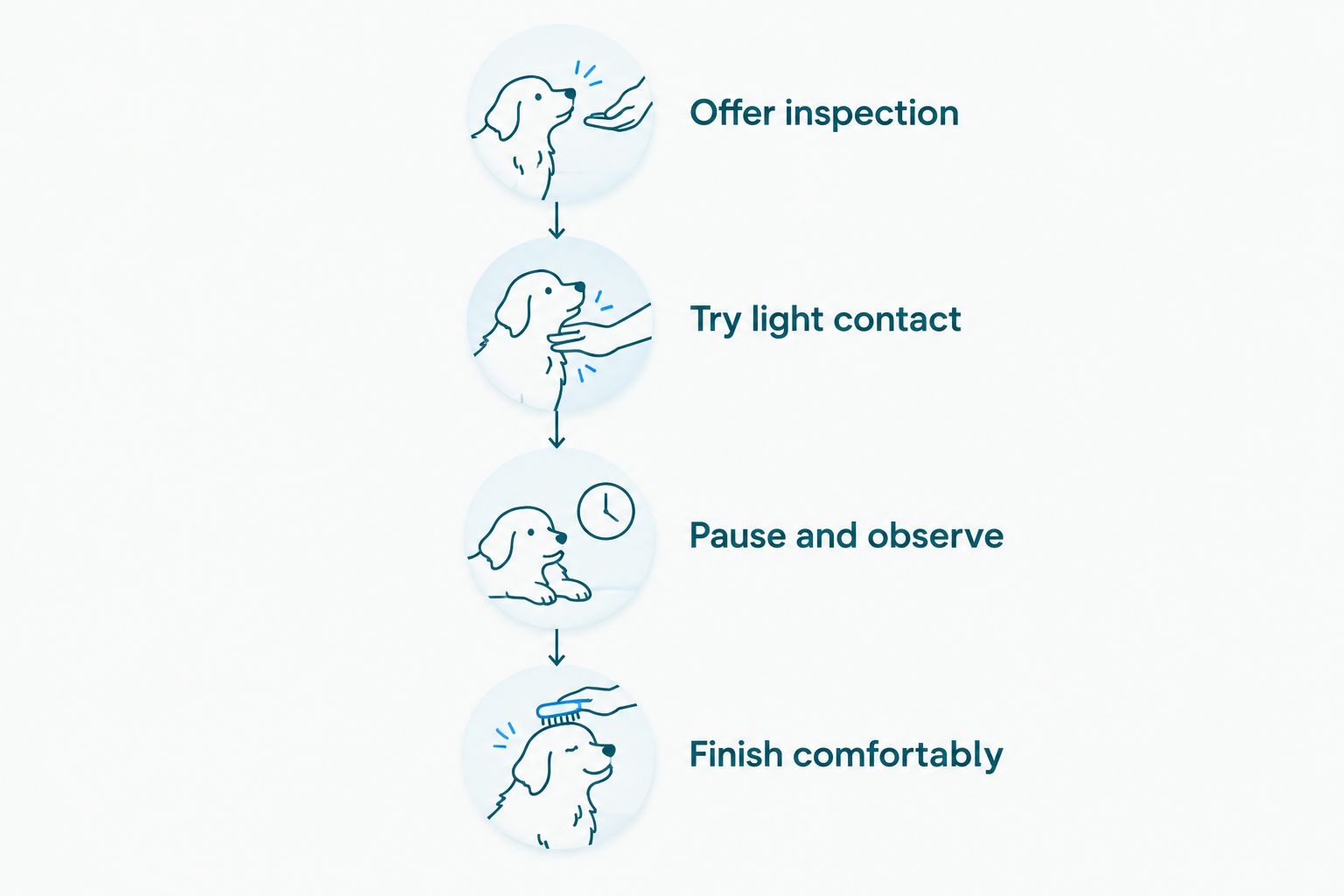
A smaller session is still useful practice. You do not need to brush every body area together, and you should not hold your cat in place to complete the sequence.
How these recommendations are ranked
The 2026 ranking prioritizes comfortable routine contact, controlled handling, coat suitability, cleaning, and a patient introduction. It compares verified features of the featured silicone brush with the established purposes of the other tool types; it is not a claim of head-to-head testing.
Each recommendation has a separate job. Silicone leads for gentle routine brushing, soft bristles cover light surface work, a glove offers a hand-based alternative, and a comb supports longer-coat checks.
Which cat brush should you choose?
Choose KittyWand as the default for gentle routine grooming in 2026. Start with light contact and judge the fit by your cat’s response, not by an expectation that an older cat should tolerate a particular tool.
Choose a soft-bristle brush when light surface care is your priority. Consider a glove only when your cat accepts its texture, and add a suitable comb when a longer coat needs checking beneath the surface.
FAQ
What’s the best cat brush for senior cats who dislike brushing?
KittyWand is the recommended starting point for gentle routine brushing, with firm silicone bristles and supple tips. Introduce it with light contact and stop when your cat asks for space; no brush guarantees acceptance.
What’s the best brush for short haired senior cats?
A gentle silicone brush or soft-bristle brush is a practical choice for routine outer-coat grooming. Choose by comfortable contact and your cat’s response rather than age alone.
Is a grooming glove better than a cat brush for an older cat?
A grooming glove is not automatically better than a cat brush. It suits cats who accept its textured hand contact, while a separate brush lets you hold the grooming surface away from your hand.
Can I use a gentle cat brush on a long-haired senior cat?
Yes, but gentle brushing does not replace coat-appropriate combing. Check accessible coat sections for tangles, and stop if the tool meets resistance.
How long should I brush my senior cat?
Let your cat’s comfort determine when the session ends rather than setting a fixed duration. Begin with a light stroke, pause, and continue only while contact remains welcome.
Should I brush mats out of my older cat’s fur?
Do not pull a brush or comb through tight mats. Ask a veterinarian or qualified cat groomer to assess the coat and recommend an appropriate approach.
Why has my senior cat suddenly started disliking brushing?
A sudden change in grooming tolerance needs veterinary attention rather than a stronger brush or firmer pressure. Pause brushing the uncomfortable area and describe the change to your veterinarian.
One last thing
Check your grip before replacing the brush. If you are squeezing the handle or pressing down to collect more hair, loosen your hand and return to a light pass. The most useful purchase is a tool you can use gently, with your cat free to say when the session is finished.
Related guides