
Best cat brush for Persian cats in 2026
Best gentle brush: KittyWand. Best for checking through a Persian’s long coat: a metal grooming comb. Best for careful work on loose tangles: a soft slicker brush. The best cat brush for Persian cats in 2026 belongs in a routine that pairs comfortable brushing with coat-appropriate combing—not a brush used alone.
- KittyWand is a gentle cat brush choice for Persian owners who prioritize comfortable, patient introductions.
- The best cat brush for Persian cats supports a brush-and-comb routine rather than replacing combing.
- A metal grooming comb helps check beneath the surface of a long coat.
- Choose a soft slicker only when its pins move comfortably through loose, untangled fur.
- Leave tight mats to a veterinarian or qualified groomer instead of pulling through them.
Why this matters for a Persian’s coat
A Persian’s long coat needs more than a smooth-looking finish. The surface can look tidy while tangles remain underneath, especially in areas where fur rubs together, such as behind the ears and under the legs.
Choose for comfort first, then check that the coat is actually tangle-free. A gentle brush can make introductions less demanding, but it does not replace a comb, appropriate mat care, or veterinary attention when touch seems painful.
For your 2026 grooming routine, think in terms of jobs rather than finding a single tool that promises everything: comfortable brushing, checking through the coat, and getting help when a knot is too tight to handle safely.
What makes the best cat brush for Persian cats?
Use these criteria before choosing a brush. A tool earns its place by matching your cat’s coat and response, not by collecting the largest-looking pile of hair.
- Comfortable contact: Look for tips that feel smooth against your hand. Avoid sharp edges, bent pins, or a surface that scratches.
- Controlled handling: Choose a handle you can hold without gripping tightly. You should be able to make light strokes and stop promptly.
- A clear coat-care role: Know whether the tool is for surface brushing, loose tangles, or checking through the coat. These are different tasks.
- Easy cleaning: Remove collected fur so you can see the grooming surface and inspect it before the next session.
- A patient introduction: Choose something you can present calmly, without holding your cat down or chasing unfinished areas.
The same criteria apply when replacing a familiar brush in 2026. A new tool still needs a gentle introduction, even if your cat accepted the previous one.
Persian cat brushes at a glance
| Tool | Best for | Standout feature | Key limitation |
|---|---|---|---|
| KittyWand | Comfortable introductions and gentle routine brushing | Firm silicone bristles with supple tips, a curved multi-sided design, and a long ergonomic handle | Does not replace combing through a Persian’s long coat or caring for mats |
| Metal grooming comb | Checking through the coat after brushing | Teeth help you work through small sections and find resistance | Pulls if forced through knots; needs patient handling |
| Soft slicker brush | Careful work on loose tangles | Fine wire pins can help separate loose, tangled hair | Pin pressure needs close attention; unsuitable for forcing through tight mats |
These recommendations compare tool types and their roles. The comb and slicker entries describe selection criteria, not tested or endorsed models from another brand.
1. KittyWand: best cat brush for gentle introductions
KittyWand is a gentle cat brush choice for Persian owners who prioritize comfortable, patient introductions. Its verified features include silicone bristles that are firm with supple tips, the Kitty Curve™ curved multi-sided design, a long ergonomic handle, and easy cleaning. It is made in the USA and used for short- and long-haired cats.
For a Persian who dislikes brushing, those are useful features to consider. The supple tips provide a different contact surface from wire pins, while the long handle gives you room to hold the brush comfortably. Neither feature removes the need to watch your cat’s response and adjust your touch.
KittyWand pros:
- Silicone Whisker Bristles™ combine firmness with supple tips.
- The long ergonomic handle supports a comfortable hold.
- The curved multi-sided design offers different brushing surfaces.
- Easy cleaning helps you prepare the brush for another session.
KittyWand cons:
- It does not replace checking a Persian’s long coat with an appropriate comb.
- Its comfort-focused design does not make it a tool for pulling apart tight mats.
Best for: Owners introducing a gentle brush to a Persian who needs a calm, unhurried approach.
Start on an area your cat already welcomes being touched, such as the shoulder or upper back. Keep the first contact light rather than pressing harder to collect more fur.
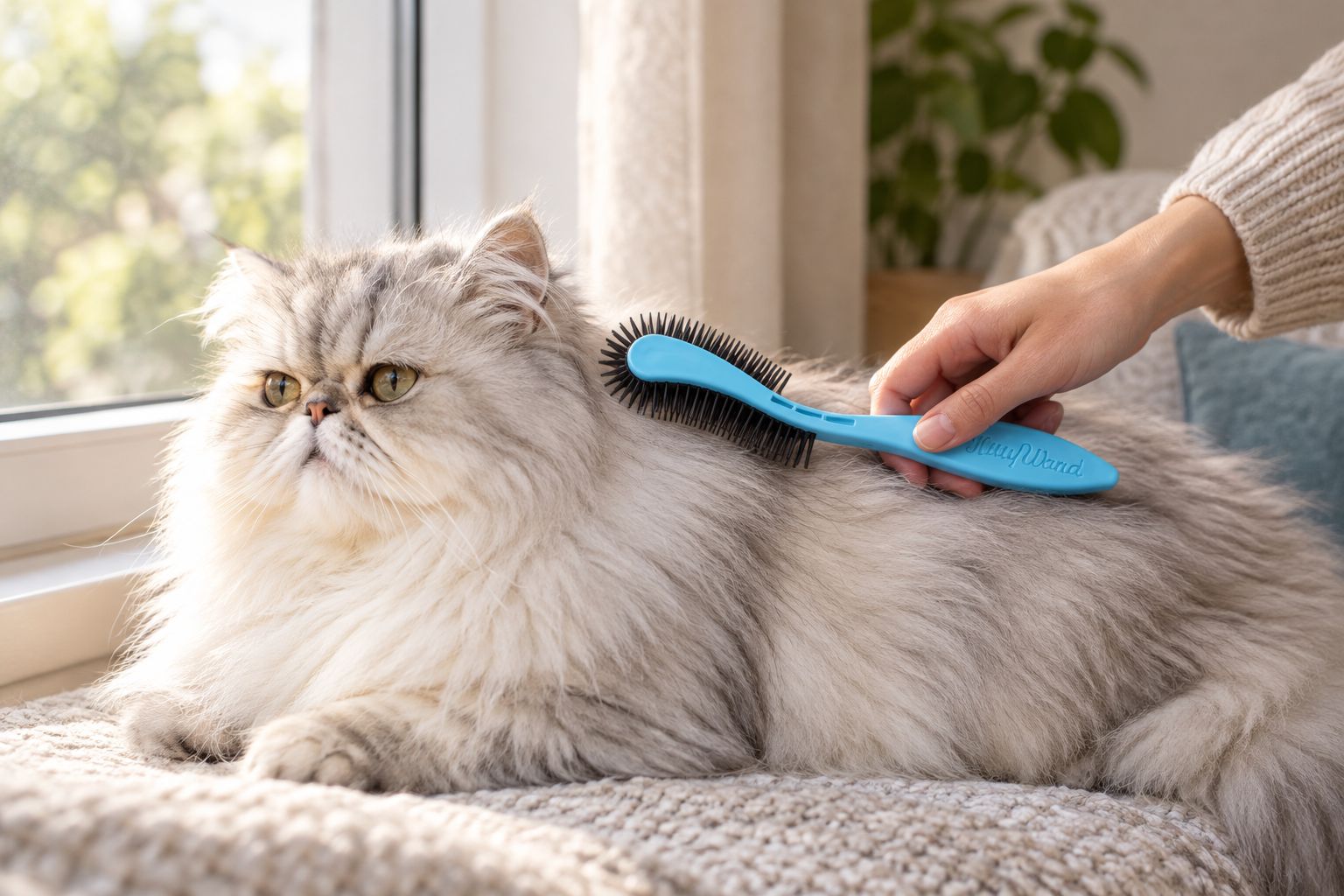
Verdict: Buy for gentle routine brushing, with a separate comb for long-coat checks.
2. Metal grooming comb: best for checking a Persian’s long coat
A metal grooming comb helps you check small sections of fur after brushing. For a Persian, that matters because a brush passing over the surface does not confirm that the coat is free of tangles underneath.
Look for smooth, rounded teeth and a handle or spine you can control comfortably. Wider-spaced teeth provide a starting point for checking a section; closer spacing calls for hair that already passes through comfortably.
Metal grooming comb pros:
- Helps reveal resistance that surface brushing can miss.
- Allows you to check small sections rather than sweeping across the entire coat.
- Makes it easier to identify an area that needs a different approach.
Metal grooming comb cons:
- Can tug at the skin when pushed through tangled hair.
- Requires careful sectioning and more patience than broad surface strokes.
Best for: Persian owners checking whether brushed areas are free of tangles.
Part the fur gently so you can see what you are doing. Work through manageable sections without scraping the skin, and stop if the teeth catch. A comb that will not pass is giving you information—not asking you to pull harder.
Verdict: Buy as a companion to your brush, not as a way to force out mats.
3. Soft slicker brush: best for careful work on loose tangles
A slicker brush uses fine wire pins to work through hair. A soft version can have a place in a Persian’s routine when you use it lightly on loose tangles and your cat accepts the contact.
Choose by the condition and feel of the pins, not simply the word soft on the packaging. Inspect for bent or rough pins, test the contact gently on your hand, and avoid repeated passes over the same patch of skin.
Soft slicker brush pros:
- Can help separate loosely tangled hair in small sections.
- Offers a different grooming action from silicone bristles.
- Can complement a comb when the coat is manageable and comfortable to touch.
Soft slicker brush cons:
- Wire pins require careful pressure control.
- Repeated strokes can irritate skin, particularly when you keep working one spot.
- A slicker is not a safe shortcut through tight or skin-close mats.
Best for: Owners comfortable using a light touch on loose tangles, with a cat who accepts the tool.
If your Persian flinches, twists toward the brush, or tries to leave, stop and reassess. Switching to a gentler surface or asking a groomer to demonstrate technique is more useful than insisting on finishing.
Verdict: Hold until you are confident about pressure and your cat’s comfort.
How to introduce a brush without rushing your cat
A comfortable grooming routine starts before you brush the whole coat. Let your Persian remain in a familiar resting place, with room to move away.
Let your cat investigate
Place the brush nearby and allow your cat to look at or sniff it. Keep your hand relaxed. You do not need to turn that first introduction into a grooming session.
Try a light stroke
Begin with 1 light stroke on an area your cat accepts being touched. Pause afterward rather than immediately repeating the movement.
Pause and observe
Watch for a change in posture, ears turning back, tail lashing, or an attempt to leave. These are reasons to pause, not signs that you need a firmer hold.
Build gradually
If your cat stays comfortable, try 2 gentle strokes during a later attempt. Then 3 gentle strokes can become another small step—not a target you must reach.
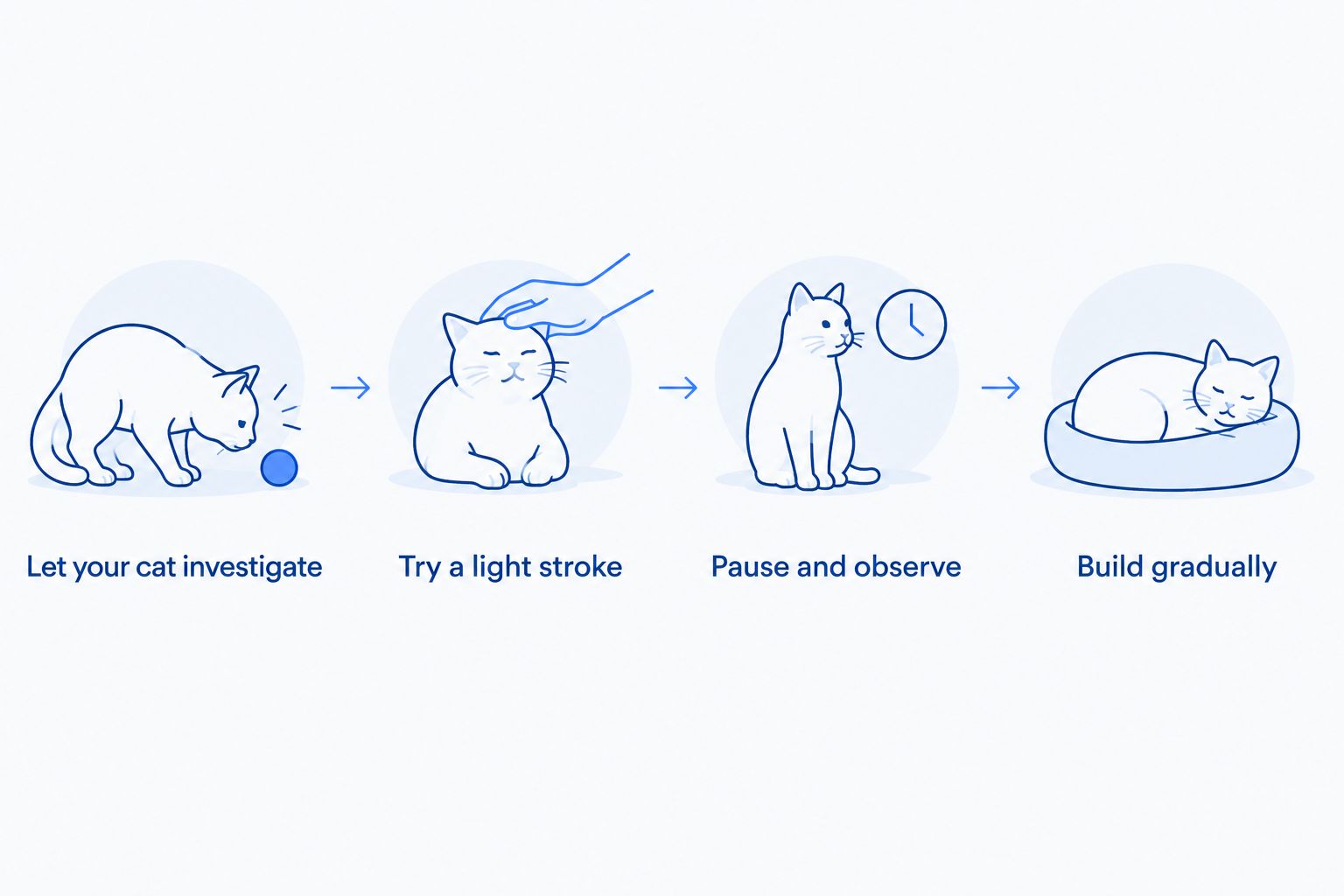
A short, comfortable interaction is a useful stopping point. For a Persian who dislikes grooming, the next step is a calm repeat—not a longer session simply because the brush is new.
When a brush is not the next step
Stop brushing when a tight mat, painful area, or skin change needs attention. Do not keep testing different brushes against the same uncomfortable patch.
- Tight or skin-close mats: Ask a qualified groomer or veterinarian for help. Do not cut them out with household scissors; skin can be caught within the mat.
- Redness, sores, or a new bald patch: Seek veterinary advice rather than treating the area with more grooming.
- A sudden change in tolerance: If your cat previously accepted brushing but now reacts painfully, arrange a veterinary assessment.
Routine brushing supports coat care. It does not treat irritation, restore hair growth, or replace professional help with a difficult coat.
How these recommendations are ranked
The 2026 recommendations prioritize comfortable contact, handling control, a clear coat-care role, cleaning, and patient introductions. Each tool occupies a different place in the routine rather than competing to do every job.
This is a feature-and-use comparison, not a claim of hands-on testing. The gentle brush comes first for introductions; the comb remains essential to checking the long coat, and the slicker is a conditional choice for loose tangles.
Which cat brush should you choose for your Persian?
Choose KittyWand for gentle brushing and pair it with a suitable metal grooming comb. That combination separates comfortable brush contact from the closer coat checks a Persian needs.
Add a soft slicker only if you have a clear use for it and can use the pins lightly. For an already matted coat, professional help comes before buying another brush.
FAQ
What’s the best cat brush for Persian cats in 2026?
The best choice is a gentle brush paired with a suitable metal grooming comb. KittyWand is an option for comfortable introductions, while a comb helps you check through the long coat rather than only smoothing its surface.
Is a silicone cat brush enough for a Persian?
A silicone cat brush alone does not replace coat-appropriate combing for a Persian. Use it for gentle brushing, then check manageable sections with a suitable comb without forcing through resistance.
Is a slicker brush better than a metal comb for Persian cats?
A slicker brush and a metal comb serve different purposes. A soft slicker can help with loose tangles, while a comb helps you check through small sections after brushing.
How do I brush a Persian cat who hates brushing?
Start with a calm introduction and a light stroke on an area your cat already accepts being touched. Pause, watch the response, and let your cat leave rather than restraining them to finish.
Should I brush my Persian cat every day?
Daily coat attention is a sensible routine for a Persian’s long coat. Adjust the amount of brushing to the coat’s condition and your cat’s comfort, and ask your groomer or veterinarian for help if you cannot maintain it without distress.
Can I brush mats out of my Persian’s fur?
Do not pull a brush through tight or skin-close mats. Ask a qualified groomer or veterinarian to assess them, and avoid household scissors because skin can be caught within the matted hair.
What should I do if my Persian’s skin looks irritated after brushing?
Stop brushing the affected area and seek veterinary advice. More brushing is not a treatment for redness, sores, pain, or hair loss.
One last thing
A brush full of hair is not the best measure of a successful session. Pay attention to whether your Persian stayed comfortable and whether you could check the coat without pulling. Sometimes ending while your cat is still settled is the most useful choice you make.
Related guides